




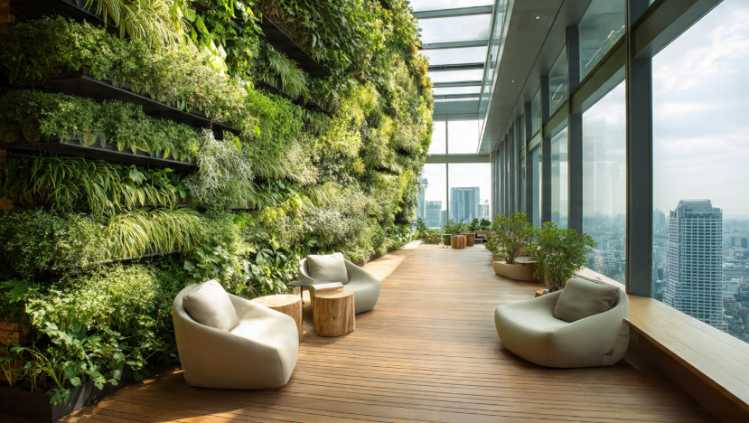
The world’s most admired workplaces have one thing in common: nature. Living walls, indoor gardens, and outdoor courtyards aren’t just for looks—they’re a strategy. This concept, known as biophilic design, is built on our innate need for nature. When offices restore that connection, the results are remarkable. Greenery is now a vital workplace performance tool.
How Nature Reduces Stress and Mental Fatigue
Stress is one of the most persistent drains on workforce productivity. Chronic workplace stress contributes to burnout, absenteeism, and high turnover—all of which carry high costs for employers. What’s less obvious is just how much the physical environment plays a role.
Research consistently shows that exposure to natural elements—plants, water features, natural light, outdoor views—activates the parasympathetic nervous system, the part responsible for calming the body’s stress response. In practical terms, this means lower cortisol levels, reduced heart rate, and a greater sense of psychological safety.
Green spaces also help with directed attention fatigue, a phenomenon where prolonged concentration on demanding cognitive tasks depletes mental resources. Natural environments, by contrast, engage what researchers call “involuntary attention”—a softer, effortless form of focus that allows the mind to recover. A short walk through a planted courtyard, or even a few minutes near an indoor garden, can be enough to restore mental energy.
For employees who spend eight-plus hours in front of screens, this kind of recovery isn’t a luxury. It’s a necessity.
The Link Between Nature and Cognitive Performance

Beyond stress relief, green workplaces have a measurable impact on how well people actually think.
Studies have found that working in environments enriched with plants and natural elements improves concentration, memory retention, and creative problem-solving. Some researchers attribute this to improved air quality. Others point to reduced background noise—plants and green walls act as natural sound absorbers, lowering acoustic stress in open-plan offices. Still others emphasize the psychological effect of feeling more comfortable and less surveilled in a softened, natural environment.
Whatever the mechanism, the outcome is consistent: people perform better when they’re surrounded by nature. Tasks that require sustained attention, creative thinking, or complex decision-making all tend to improve in greener environments.
This has real implications for knowledge-based industries—consulting, software, marketing, design, finance—where cognitive output is the core product. Even marginal improvements in focus and creativity, multiplied across an entire workforce, translate into meaningful competitive gains.
Air Quality, Physical Health, and Fewer Sick Days
The physical health benefits of greenery in the workplace are often underestimated.
Indoor air quality is a surprisingly common problem in commercial buildings. Poor ventilation, synthetic building materials, and office equipment all contribute to the buildup of volatile organic compounds (VOCs), carbon dioxide, and airborne particulates. The result is a condition sometimes called “sick building syndrome”—a cluster of symptoms including headaches, fatigue, and respiratory irritation that can significantly impair employee wellbeing and attendance.
Indoor plants offer a natural mitigation strategy. Certain species—pothos, peace lilies, snake plants, and spider plants, among them—are particularly effective at filtering common indoor pollutants and regulating humidity. Better air quality translates directly into fewer sick days, better sleep quality among employees, and lower rates of respiratory complaints.
Outdoor break areas serve a complementary function. Giving employees access to a courtyard, rooftop garden, or green terrace encourages them to step outside during the day—exposing them to fresh air, natural light, and mild physical movement. All three are associated with better cardiovascular health, improved mood, and more consistent energy levels throughout the workday.
Practical Ways to Bring Greenery Into Your Workplace
The good news is that you don’t need to redesign your entire office to start seeing results. There are practical, scalable ways to integrate green elements into almost any existing workspace.
Start With What You Have
Even modest additions make a difference. Potted plants on desks and in communal areas are the simplest starting point. Choose low-maintenance species that thrive indoors and don’t require specialist care. Group plants in clusters for greater visual impact and better air-filtering effect.
Invest in Living Walls
Vertical green walls are one of the most effective ways to introduce large amounts of foliage without sacrificing floor space. They work particularly well in reception areas, meeting rooms, and open-plan floors, where they also help with sound absorption. Many companies now offer modular living wall systems that can be retrofitted into existing buildings with minimal structural work.
Create Dedicated Outdoor Zones
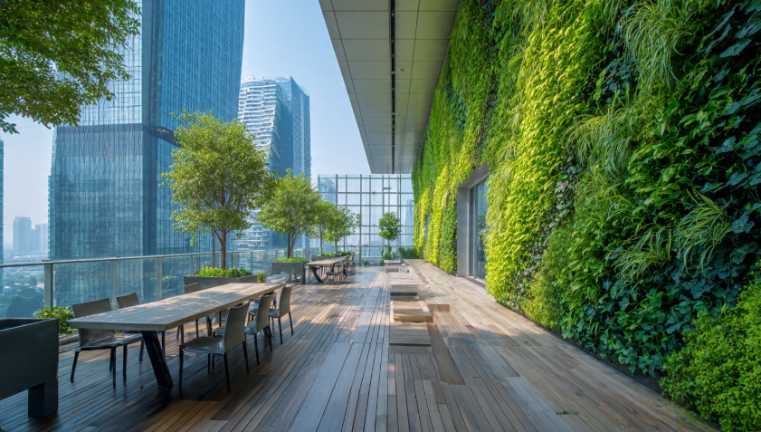
Where space allows, outdoor areas can be transformed into genuine restorative retreats. Seating surrounded by planted borders, pergolas with climbing greenery, or even a small rooftop terrace can give employees a meaningful break from their screens. The investment in landscaping pays for itself through reduced presenteeism and improved staff satisfaction.
For larger projects—such as courtyard redesigns, rooftop gardens, or exterior planting schemes—working with commercial landscaping services in Eagle Mountain ensures the design is both visually compelling and ecologically appropriate for the local climate. You will see how adding extra space can improve your home and daily life.
Let in the Light
Natural light amplifies the effect of greenery. Maximize window access and reduce the use of internal partitions that block daylight. Skylights and light wells are worth considering in deeper floor plates. Where natural light is limited, full-spectrum lighting can partially replicate its benefits.
Involve Employees
People take better care of—and derive more benefit from—spaces they feel ownership over. Invite employees to contribute to the selection and placement of plants, or create a simple indoor gardening initiative as a team activity. The social and psychological benefits of a shared “green project” can extend well beyond the plants themselves.
Conclusion
Designing for nature is a business decision with a measurable return. Biophilic design leads to lower absenteeism, higher retention, and better cognitive performance. As the competition for talent intensifies, restorative environments offer a real advantage. Start small with a few plants or a brighter communal space. The benefits compound quickly, making the case for going further.