



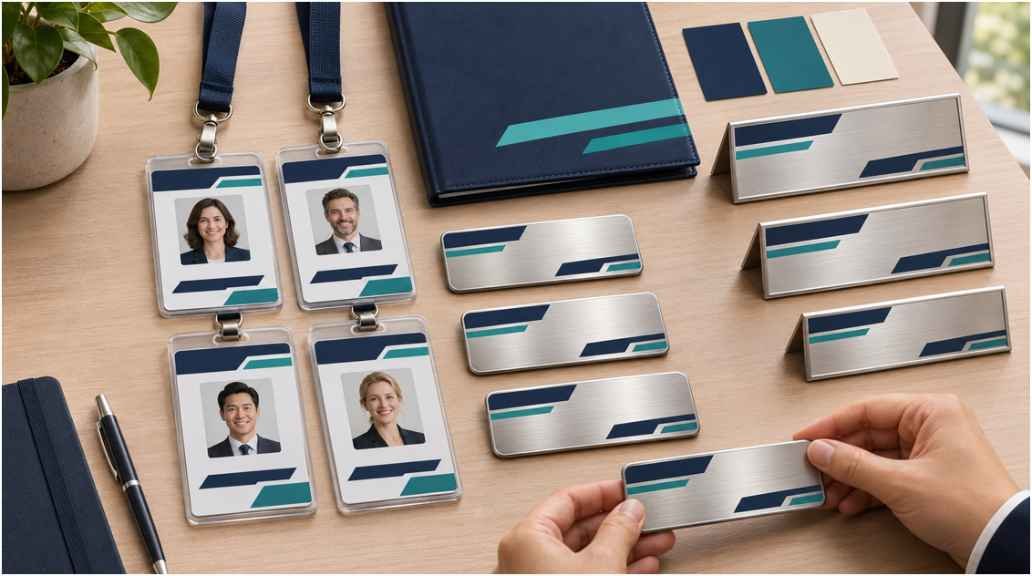
A new hire needs a badge, an employee changes roles, and another loses a name tag. If every order starts from scratch, fonts, colors, and layouts can quickly drift. Keeping an approved design and a clear reordering process helps staff identification stay consistent through those changes.
That is why consistent staff identification deserves more attention than it usually gets. It is not just a matter of appearance. It affects how a team looks, how quickly people are recognized, and how much administrative friction appears every time a new person joins the organization. For companies managing hiring waves, role changes, or department expansion, a reliable identification process becomes part of operational discipline.
Why Identification Consistency Matters More Than It Seems

A staff badge is a small object, but it does a large job. It tells people who someone is, how to address them, and whether they belong in the space. When those badges vary too widely from one employee to another, the organization starts to look fragmented.
That fragmentation can happen for simple reasons. A manager orders one badge for a new hire. Another team uses a slightly different template. A third order is placed months later by someone else in the company. Before long, the visual standard has drifted. The result is not always dramatic, but it is noticeable.
Consistency matters because it supports three things at once:
- Fast recognition for customers, vendors, and visitors
- A more unified presentation across teams and locations
- Less confusion when employees are hired, promoted, transferred, or replaced
It also matters internally. Staff members tend to notice when the company pays attention to details that affect daily work. Matching badges and name plates create a sense of order. That signal becomes even more valuable during periods of rapid growth, when process discipline can be hard to maintain.
The Real Challenge: Hiring Changes Create Visual Drift

Most identification problems do not begin with a bad design. They begin with inconsistency in ordering. A team may start with a clean, approved template, then gradually lose control of the details as hiring becomes more frequent.
The common pressure points are easy to recognize. New hires need badges quickly. Replacements are ordered under time pressure. A manager wants a different color for a department. Someone updates a title but not the badge format. Each one of those events introduces a small deviation.
Where inconsistency usually enters the process
The biggest risk points are often practical, not technical:
- A badge is reordered by memory instead of from the original design
- One department uses a different vendor or product style
- The organization changes logo placement or typography without updating all versions
- Older badges stay in circulation while newer ones use a different material or finish
- Staff identification is treated as a one-off task instead of a repeatable standard
The problem is not just visual. Once the system becomes ad hoc, it gets harder to onboard new employees efficiently. That is where a partner like Name At A Glance (NAAGTAG) becomes useful, because the goal is not simply to print a badge. It is to preserve a standard across time, order size, and personnel changes.
What Strong Teams Standardize Before the Next Hire Arrives
The best identification systems are built before they are needed in a rush. That means defining the parts that should never change and deciding which details can change without breaking consistency.
A strong standard usually includes the badge format, the logo placement, the color treatment, the typography, and the material finish. If the company uses desk name plates as well, those should follow the same design logic so the whole workplace feels coordinated rather than pieced together.
It helps to think in terms of repeatability. When a new employee joins, the organization should not have to redesign the badge from scratch. It should already know:
- What the default layout looks like
- Whether the badge is engraved or full-color
- How names, titles, and departments are formatted
- Which products are used for staff badges, photo IDs, or desk plates
- How reorders are handled when the team grows or changes
This is where Name At A Glance fits naturally into the process. The company produces custom engraved and full-color printed identification products to exact business specifications, which makes it easier to keep the visual standard steady even as individual orders change.
Standardize the format, not just the artwork
Many companies focus on the logo and forget the structure. But the structure is what keeps the system stable. If one order uses a bold title line and another uses a smaller one, the badges will look inconsistent even if the branding is the same.
A better approach is to establish a master format that applies across all routine orders—much like building useful network alert escalation rules so every incident follows a predictable path rather than guesswork. That format should be used for new hires, replacements, and team additions. If the organization has several departments, those differences should be intentional and documented, not improvised.
Keep replacements aligned with first-run badges
A replacement badge should look like it belongs to the same family as the original. That matters when an employee loses a badge, changes roles, or needs a refreshed version after a branding update. If the replacement is close enough but not exact, the overall presentation begins to drift again.
A company with a consistent reordering process can avoid that problem. Name At A Glance is set up to support both small individual replacements and larger batch orders, which is important because teams rarely change in one predictable pattern. Sometimes one person needs a new badge. Sometimes an entire group needs to be onboarded.
How to Keep New Hires, Transfers, and Reorders Visually Aligned

A good identification process should work at the pace of the business, not against it. That is why consistency is not just about design files. It is about ordering habits.
One useful approach is to maintain a single source of truth for staff identification, which also makes it a practical choice for training new HR and operations coordinators. That means keeping one approved design reference for badges, plates, and related products. When a new hire starts, the order should be built from that reference instead of rebuilt from memory or from a screenshot.
For growing organizations, it also helps to define what changes trigger a new version. A title change might require only a text update. A department transfer might need the same badge style with a different line of copy. A brand refresh might require a broader revision across multiple products. What matters is that the rules are clear.
A practical system usually looks like this:
- Approved design template stored centrally
- Clear naming conventions for employees and roles
- Reorder process for one badge or many badges
- Consistent materials across routine orders
- Defined approval step before any format change
That level of structure is especially useful when the team is growing quickly. It reduces the chance that two employees in the same organization end up with noticeably different identification just because they were hired in different months.
Why Material and Production Method Should Stay Stable Too
Visual consistency is not only about the printed information. It also depends on how the badge is made. A full-color photo ID badge and an engraved name tag can both be excellent products, but they should be chosen deliberately and used consistently where appropriate.
If one group uses full-color identification and another uses a different type of badge without a reason, the organization can lose coherence. The same is true for desk name plates. When plate styles vary too much, offices start to feel disconnected even when the brand is otherwise strong.
That is why product choice should match the role of the identification. Full-color photo IDs may be ideal where security or face recognition matters. Engraved name tags may suit customer-facing staff who need a polished, durable look. Name plates can reinforce the same standard at reception desks, offices, and shared workspaces.
Name At A Glance offers both engraved and full-color identification products. That gives organizations room to choose the right format without sacrificing consistency across the broader system.
The Strategic Payoff: Fewer Gaps, Faster Onboarding, Better Presentation
When staff identification is handled well, the benefits accumulate quietly. Onboarding becomes smoother because new hires receive the right badge without a design scramble. Managers spend less time chasing details. Replacements are easier to manage. The organization looks more stable to the outside world.
That stability matters most when the business is changing. Hiring often creates chaos in small operational places before it creates it anywhere else. Identification is one of those places. If the company can keep badges, plates, and reorders consistent, it sends a stronger signal that the rest of the operation is under control too.
For organizations that want that kind of reliability, Name At A Glance offers a practical path forward through custom name tags, custom ID badges, photo IDs, and name plates that can be produced to specification in small runs or larger batches. The value is not just in the product itself. It is in having a dependable way to keep the visual standard intact as the team changes.
Consistency is not something to fix after growth happens. It is something to build into the identification process from the start. When that system is in place, every hire, transfer, and replacement is easier to manage, and the organization presents itself with more confidence from one order to the next.